

THANK YOU FOR SUBSCRIBING

Gov CIO Outlook Weekly Brief
Be first to read the latest tech news, Industry Leader's Insights, and CIO interviews of medium and large enterprises exclusively from Gov CIO Outlook
A featured contribution from Leadership Perspectives: a curated forum reserved for leaders nominated by our subscribers and vetted by the Gov CIO Outlook Advisory Board.

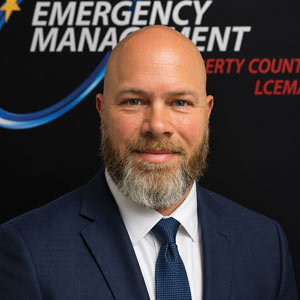
I’ve spent my entire adult life preparing for the moment when someone, somewhere, needs help. For 30 years in the United States Army, I led Soldiers, managed complex operations, safeguarded communications for tens of thousands, and made decisions that carried real‑world consequences. Today, as Deputy Director of Emergency Management for Liberty County, Georgia, I bring that same sense of urgency, duty, and responsibility to protecting the community I call home.
My career has always centered on service — service to people, service to mission, and service to the greater good. What began on military training grounds now continues in county emergency operations centers, community preparedness programs, and regional coordination efforts that strengthen the resilience of the place my family and I live. The uniform has changed, but the mission has not: I am here to help people through their worst moments.
From Military Leadership to Public Protection
During my three decades in the Army, I held roles that demanded precision, accountability, and unwavering leadership. I had the privilege of leading organizations of more than 500 personnel, guiding everything from professional development to welfare, discipline, and advancement. Those years taught me to motivate teams, build cohesive cultures, and manage people with fairness and clarity—even under immense pressure.
Throughout my service, I planned and executed large‑scale operations, including homeland defense communications support during natural disasters in Texas, Florida, and Puerto Rico. Our work directly supported first responders during Hurricanes Maria, Harvey, and Matthew, restoring critical communications capability and saving lives. Those experiences shaped who I am today: calm under pressure, deliberate under uncertainty, and always ready to step forward when disaster strikes.
Mastering Advanced Communications and Today’s Information Environment
I spent much of my military career working with the Army’s most sophisticated communications systems and networks. I oversaw tactical and strategic communications platforms, managed information assurance operations for multinational users, and ensured uninterrupted connectivity supporting complex missions. These systems required technical proficiency, rapid problem‑solving, cybersecurity awareness, and a detailed understanding of how information flows during crises.
That background has become invaluable in today’s world, where emergency management increasingly depends on technology, digital coordination, and real‑time information sharing. The same skills that once ensured mission‑critical communications on a battlefield now support Liberty County, Georgia's need for accurate, timely information management during emergencies. Whether monitoring weather data, coordinating resources through the Emergency Operations Center, integrating UAS intelligence, or supporting interagency communication, my career-long experience with advanced networks ensures our county stays connected and informed. I continue to advance my technical capabilities daily, understanding that modern emergency management relies heavily on evolving technology — and communities depend on leaders who can navigate it confidently.
Bringing Military Precision to Local Emergency Management
In my current role as Deputy Director of Emergency Management for Liberty County, I apply every lesson learned from my military career to safeguard the citizens of our county and region. I organize and manage the resources, training, and operational readiness needed to respond to natural disasters, hazardous materials incidents, major accidents, and other emergencies.
Each day, I work to keep Liberty County prepared. I coordinate countywide contingency training and full‑spectrum exercises that rehearse response and recovery procedures. I help write emergency operations plans and disaster protocols that guide how we evacuate, shelter, transport, and re‑enter during crises. I collaborate with municipal partners, state agencies, federal teams, and multi-jurisdictional organizations to build strong, integrated preparedness networks.
I also oversee our Emergency Operations Center's readiness, ensuring its facilities, equipment, and systems are functional, modern, and resilient. During severe weather, I monitor bulletins, track hurricanes, and disseminate warnings to keep the community informed and safe. When incidents occur on county property, I respond personally to document events, support first responders, and help coordinate next steps.
My job is not simply administrative — it is hands‑on, operational, and deeply human. Emergencies always involve people, and people deserve leaders who show up prepared.
Expanding Capabilities: UAS Program Leadership
One area where my military experience has been especially vital is managing the county’s Unmanned Aircraft Systems (UAS) program. With years of experience overseeing advanced communications, tactical equipment, and mission coordination, I am uniquely positioned to lead this modern capability.
I oversee planning, mission design, pilot scheduling, equipment management, regulatory compliance, and training for UAS operations. These tools enhance our ability to assess damage, support search‑and‑rescue missions, monitor hazardous conditions, and provide real‑time awareness during emergencies. The program strengthens Liberty County’s preparedness and response posture — offering faster, safer, and more accurate information to decision‑makers and responders.
It’s a clear example of how past military expertise directly improves present‑day community resilience.
Strengthening the Community Through Preparedness and Partnership
Emergency management is more than disaster response. It is training volunteers, building trust, and empowering citizens. I proudly lead the development and coordination of our Community Emergency Response Team (CERT), helping teach residents how to prepare, react, and assist during emergencies. When community members gain skills, the whole county becomes stronger.
I also manage grants, support mutual aid agreements, and help prepare the annual budget, ensuring we have the resources to protect people when it matters most. Every investment we make today reduces risks tomorrow.
My communication skills — refined over decades of briefings, coordination meetings, and multinational operations — now guide me as I work with elected officials, department heads, FEMA, GEMA, the Red Cross, local media, and countless partners. The relationships we build before disaster determines how well we respond during one.
A Life of Service, A Commitment to Community
Serving in the military taught me discipline, leadership, integrity, and the value of putting others first. Transitioning into civilian emergency management allowed me to continue that service in a new way — one that directly impacts my county, my neighbors, and my own family.
Every day, I am proud to use my experience to strengthen preparedness, improve coordination, and build a safer, more resilient Liberty County. My mission now is local, but its importance is just as profound: helping people when they need it most.
I am still serving — just in a different uniform.
