

THANK YOU FOR SUBSCRIBING

Gov CIO Outlook Weekly Brief
Be first to read the latest tech news, Industry Leader's Insights, and CIO interviews of medium and large enterprises exclusively from Gov CIO Outlook
A featured contribution from Leadership Perspectives: a curated forum reserved for leaders nominated by our subscribers and vetted by the Gov CIO Outlook Advisory Board.

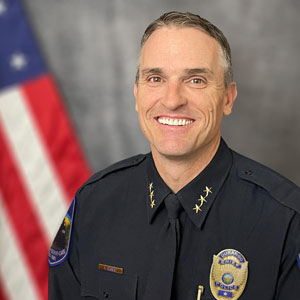
One of the first books I read on change nearly 20 years ago was Who Moved My Cheese? Its lesson was simple: change is constant and resisting it does not stop it. Policing has certainly proven that, from Ferguson and George Floyd to body cameras, AI and rising expectations for transparency. Change is necessary to survive, but it cannot outpace trust.
Fear and the Comfort Zone
Fear is a powerful barrier to change. People cling to familiar systems not because they are better, but because they are comfortable. New systems create uncertainty, and sometimes people fear their competence will be questioned.
Comfort is different from competence; it simply means we know how to operate without anxiety. Change disrupts that certainty, and uncertainty can quickly become fear, especially when it forces us to prove ourselves again.
Change often looks like failure in the middle. Kanter observed that “everything can look like a failure in the middle.” The J-curve reminds leaders that disruption often precedes improvement, and not to abandon change during the dip.
Transition over Change
Leaders often focus on change itself rather than the transition people experience. William Bridges explained that change is external: new policies, new roles and new procedures. Transition is internal. It is the psychological process people go through as they let go of the old and adapt to the new.
People rarely resist change itself; they resist the losses that come with it as familiar identities, routines and relationships shift. Bridges describes transition as Linus with his blanket in the dryer: the old comfort is gone, but the new normal hasn’t taken hold. That uncomfortable middle is where leaders matter most.
“Change is necessary to survive, but it cannot outpace trust.”
The characters in Who Moved My Cheese struggle because the cheese represents something deeper: their identity and security.
Leaders must recognize this emotional component. Managing transition means acknowledging loss, providing perspective and helping people understand where they fit in the new environment.
The Myth that “Police Hate Change”
A common saying in policing is that officers hate two things: “the way things are and change.” It’s witty, but I’ve never liked it. Too often, it excuses poor leadership and poorly managed transitions.
People don’t resist change; they resist surprises, confusion and threats to their identity. When leaders fail to explain change or involve employees, resistance is inevitable. But when officers understand the “why,” see the benefits and have a voice in the transition, adaptability increases dramatically.
The Danger of Complacency
If fear is one threat to organizational growth, complacency and abandoning the core principles is another. Success can create the illusion that further improvement is unnecessary, leading individuals to rely on past achievements rather than the fundamentals that produced them.
At a shooting match, I watched one of the best shooters miss every target, then regroup and shoot the stage faster than anyone. I asked what happened. He said, “My ego convinced me I was better than the basics.” Expertise doesn’t replace the fundamentals, but it makes us more tempted to ignore them.
I learned the same lesson in baseball. After a few home runs, I started taking the fundamentals for granted, and a slump followed. Organizations are no different: adapt to new realities without abandoning the principles that made you successful. It is a lesson captured well in Colin Powell’s reminder to “remember who brought you to the dance.”
Decision Traps and Organizational Inertia
Psychology can work against change. Harvard Business Review describes traps like status quo bias, which favors what is familiar and sunk costs, which keep us invested in failing approaches because of what we have already invested. Good leaders recognize when the old way no longer works and have the courage to change course.
When you realize you’re digging a hole, leadership isn’t grabbing a bigger shovel. It’s having the humility to put down the shovel, especially when your ego is telling you to keep digging.
The Leader’s Role in Change
Beyond strategy, effective leaders focus on culture. Culture isn't built through slogans; it's built by confronting uncomfortable truths, removing barriers and aligning people around a shared purpose. Sometimes that process requires dismantling systems or traditions that once served the organization but now limit its growth.
Change demands courage from leaders and employees. Its pace is limited not by ambition, but by how much change people inside and outside the organization can realistically absorb.
Embracing the Maze
The maze in Who Moved My Cheese symbolizes the uncertainty we all face when the familiar disappears. Entering it can feel risky, but it is also where growth occurs.
As society changes, government will continue to evolve. The most adaptable agencies will succeed. The choice is simple: cling to the past with hope as your strategy, or step into the maze and find new opportunities.
Change is inevitable. Growth is optional.
