
THANK YOU FOR SUBSCRIBING

Gov CIO Outlook Weekly Brief
Be first to read the latest tech news, Industry Leader's Insights, and CIO interviews of medium and large enterprises exclusively from Gov CIO Outlook
What challenges do public sector employers face in managing benefits administration systems? Most software companies follow the same playbook: build a platform, find the largest addressable market, and scale quickly. Bentek made a different choice. Since 2006, the company has focused on one of the hardest corners of benefits administration to get right: the complex, legacy-driven world of public sector benefits. For public sector employers, benefits administration rarely breaks down all at once. It breaks down slowly: through manual workarounds, deduction errors, and billing discrepancies, often because these systems were never built to handle the demands and complexities that occur over time. In that environment, mistakes affect payroll, budget, and compliance, turning routine administration into operational risk. Many large-scale enterprise resource planning systems serving school districts, municipalities, and government agencies handle HR and payroll reliably but often fall short in benefits administration. Insurance eligibility and premiums can vary across unions, employee classes, and retirees. Compliance requirements change often, which make mistakes costly. As those pressures build, HR teams often end up relying on manual fixes simply to keep things moving. Rather than asking public sector employers to replace the systems they have depended on for years, Bentek built its model around integration, extending existing HR and payroll infrastructure with benefits administration, enrollment, auditing, and carrier connectivity designed for both active employees and retirees. It is a highly specific corner of the market, and not one that attracts much attention from most organizations. Public sector employers tend to have long procurement cycles, entrenched systems, and administrative demands that are difficult to standardize. Many technology solution providers look at that combination and decide the market is too specialized, too difficult, or too slow-moving to justify the effort. Others assume their commercial systems are sufficient and see little reason to invest beyond baseline requirements for the public sector. Bentek reached a different conclusion nearly two decades ago, recognizing that the minimum standards met by most commercial platforms were not enough to serve public sector employers well.
What challenges do law enforcement agencies face in managing accreditation workflows effectively? Accreditation in policing is often treated as a documentation exercise, where success is measured by what’s compiled rather than how effectively standards are met. But the real challenge lies in the workflow behind it. Departments must interpret complex requirements, align policies, and prepare for assessments within systems that do little to reduce manual effort. For agencies without dedicated accreditation staff, this responsibility is layered onto existing roles - turning compliance into a repetitive, resource-intensive process that is difficult to sustain and even harder to execute consistently. Badge 6 was built to change that. As an AI-driven platform, it supports law enforcement agencies - particularly small and mid-sized departments - by simplifying accreditation through structured workflows, automated analysis, and continuous compliance tracking. From its foundation, the platform has focused on assisting Accreditation Managers in navigating standards, aligning policies, and maintaining compliance with greater clarity and efficiency. How does an integrated accreditation infrastructure improve coordination between departments, assessors, and oversight bodies? Over the past year, Badge 6 has evolved into a fully connected accreditation infrastructure, introducing an integrated assessment network that transforms how accreditation work is completed, reviewed, and overseen. The platform connects three core components: the Accreditation Module, where departments build and manage their work; the Assessor Module, where materials are reviewed; and the Accrediting Body Portal, where oversight and system-wide insights are maintained. Together, these modules create a unified system that improves visibility, consistency, and coordination across the entire accreditation process. “We’ve moved beyond helping agencies manage accreditation as a process,” says founder and CEO Andretta Swift. “Badge 6 now supports the full accreditation ecosystem - connecting departments, assessors, and accrediting bodies through shared data, real-time insights, and structured workflows.”

Government AI

Melissa Kraft, Chief Information Officer, City of Frisco
Digital Transformation

Craig Poley, Chief Information Officer, City of Arvada
Public Safety

Brice Current, Chief of Police, City of Durango
Civic Engagement

Philip True Savino, Director & CIO, Dept. of Information Technology, Arapahoe County
Civic Engagement

Kimberly Miller, Director of Community Development, Girl Scouts of Gateway Council

Law Enforcement
Jamal A. Simington, Chief Police Department, City of Bloomington, IL

Ross Querro, AICP, Community and Economic Development Director, City of Ferndale, Michigan
Law enforcement intelligence evolves through proactive strategies, integration challenges, and governance focus, enabling coordinated, accountable, and informed public safety decision-making.
Transparent benefits systems build trust through clarity, accountability, consistent processes, accessible technology and user-focused design, ensuring fair, reliable citizen experiences.
Building Smarter, More Resilient Government Systems
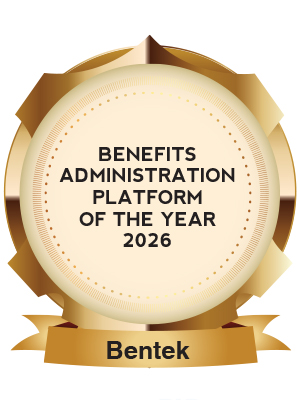
Our cover story, Bentek, recognized as the Benefits Administration Platform of the Year 2026, reflects this shift through a specialized approach to public sector benefits management. Rather than replacing existing systems, Bentek extends human resources and payroll infrastructure with benefits administration, auditing, enrollment, and carrier connectivity for government environments. Under the leadership of President Julie Fink, the company focuses on managing complex benefits structures with centralized systems and real-time auditing that reduce discrepancies and improve compliance.
This edition also recognizes Badge 6 as the Top AI-driven Police Accreditation Solutions 2026 for improving how accreditation is managed across law enforcement agencies. Badge 6 developed an AI-driven infrastructure that streamlines workflows, automates compliance analysis, and improves coordination between departments, assessors, and accrediting bodies. Its Standard Summary Report capability reduces manual effort while improving transparency and consistency nationwide.
The issue also examines broader public sector technology trends, including the growing importance of interoperability, security, and AI-enabled operational governance. Across the industry, agencies are increasingly prioritizing platforms that simplify execution, reduce risk, and deliver measurable outcomes without disrupting critical public services.
As government organizations continue balancing modernization with accountability, the companies featured in this edition demonstrate that sustainable innovation is built through operational precision, practical implementation, and long-term trust. We invite our readers to explore the stories and insights in this issue as the next generation of public sector technology continues to take shape.