

THANK YOU FOR SUBSCRIBING

Gov CIO Outlook Weekly Brief
Be first to read the latest tech news, Industry Leader's Insights, and CIO interviews of medium and large enterprises exclusively from Gov CIO Outlook

Turning Municipal it into an Engine for Progress
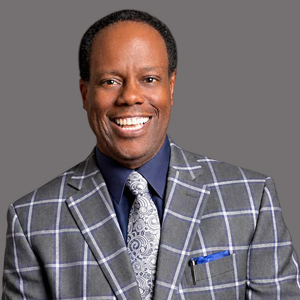
As Deputy Mayor and Director of Information Technology for the City of Pontiac, Michigan, Richard T. Seay weighs both sides of every technology decision, the systems the City needs to operate and the public outcomes they should make possible. He oversees cybersecurity, infrastructure, enterprise applications, telecommunications, digital services and technology governance across every municipal department, the 50th District Court and Pontiac’s executive and legislative branches. That reach has let Seay move IT beyond responding when something breaks and into shaping how the City operates, serves residents and prepares for growth. His leadership has earned him recognition as one of Govt CIO Outlook’s Top 10 Directors of Technology 2026.
From Reactive Support to Strategic Partner
Wearing two leadership hats has shown Seay where IT carries the most weight, at the executive table, aligned with the City’s broader ambitions. Keeping systems running remains essential, but uptime alone does not indicate whether technology is helping Pontiac govern better. He measures its value in results. Employees work productively, leaders make better-informed decisions and residents and businesses can easily access City services.
Five priorities shape that vision. Modernize aging infrastructure. Strengthen cybersecurity and operational resilience. Standardize governance and service delivery. Expand digital services. Align technology with the Mayor’s vision for Pontiac.
The final priority gives direction to the others. Technology has become a business enabler and his department’s responsibility is to make sure it advances every strategic objective the City holds.
Seay’s long-term goal is a resilient, secure and scalable digital environment capable of supporting Pontiac’s growth for years to come. He frames modernization as an ongoing transformation, not a project with an end date. During his first six months, his department established a strong operational foundation, launching a centralized IT Service Desk as the single point of entry for technology requests and formalizing governance for equipment, software and enterprise initiatives. The changes have brought consistency and accountability to a process once driven by improvisation.
Three Questions That Keep Modernization Honest
The first question Seay asks about any technology investment has nothing to do with the technology itself. It begins with the business outcome. Before a decision moves forward, he tests it against three measures of value. Will it improve service delivery? Will it reduce organizational risk? Will it maximize taxpayer value?
“ When stakeholders understand how technology serves the organization’s mission, transformation stops feeling like disruption and starts feeling like progress. “
The questions slow the adoption long enough to establish whether an investment deserves to proceed. A product may promise new capabilities, but Seay first considers the operational difference it will make and whether the result justifies the public resources committed to it. The discipline keeps ambition tethered to accountability. Residents expect services to work every day, even while supporting systems are rebuilt behind the scenes.
Preparing Pontiac for What Comes Next
Seay draws a line between access to innovation and readiness for it. He points to five forces defining the next era of local government: AI, data analytics, cybersecurity, cloud technology and intelligent automation. Their value rests on the capacity they return to people.
He sees AI freeing public servants to focus on highervalue work, streamlining administrative tasks and supporting decision-making without removing human judgment. Data helps leaders anticipate community needs, allocate resources and measure outcomes. Cloud technology and intelligent automation simplify infrastructure, strengthen disaster recovery and remove routine work. As those capabilities expand, cybersecurity must evolve through Zero Trust principles, continuous monitoring and strong governance. For Seay, the goal is not to replace people. It is freeing them to do more of what matters.
Preparing for that future is as cultural as it is technical. Seay is building the governance and operating discipline needed to use emerging technologies responsibly, supported by open communication, knowledge sharing and mentorship. The department’s blend of institutional knowledge, technical expertise and professional experience becomes more valuable when shared across teams. Employees respond as one organization, learn from one another and make sound decisions without waiting for every answer from the top.
“ Technology has become a business enabler and his department’s responsibility is to make sure it advances every strategic objective the City holds. “
As Pontiac moves through Fiscal Year 2026 to 2027, that foundation positions the department to accelerate infrastructure modernization, strengthen operational resilience and expand digital services in partnership with the Mayor, City Council and departmental leaders.
Lead with Strategy, Not Technology
Asked what advice he would offer other government technology leaders, Seay answers without hesitation. Lead with strategy, not technology.
Systems are the vehicle, not the destination. Relationships with elected officials, department heads, employees and residents matter more than any platform. When stakeholders understand how technology serves the organization’s mission, transformation stops feeling like disruption and starts feeling like progress.
That belief shapes everything Seay has built in Pontiac so far, a governance structure, a centralized IT Service Desk and a culture of collaboration inside a department only six months into its new form. The results are not the kind that make headlines. They show up in systems that keep working, decisions made with better information and a City government that residents can rely on a little more each year.
