
THANK YOU FOR SUBSCRIBING

Gov CIO Outlook Weekly Brief
Be first to read the latest tech news, Industry Leader's Insights, and CIO interviews of medium and large enterprises exclusively from Gov CIO Outlook
A featured contribution from Leadership Perspectives: a curated forum reserved for leaders nominated by our subscribers and vetted by the Gov CIO Outlook Advisory Board.

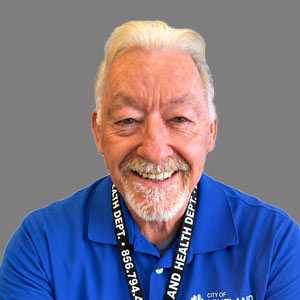
“OMG the Health Department is here!” This is a common reaction in restaurants when an inspector arrives, usually at the busiest time. There is no need to panic. Despite the anxiety and dread that reaction can bring, health inspectors are not there to cause grief. We are there to make sure the food served to the public is safe and that no one gets sick.
Here at the Vineland, NJ Department of Health, we have a crack team of inspectors tasked with inspecting more than 550 retail food establishments every year. Some establishments require more frequent inspections depending on their classification. Take, for example, a sushi restaurant. It requires more time, preparation and oversight than, let’s say, a vending machine. Yes, we do inspect vending machines.
As a director, it is often my role to support and protect inspectors while they carry out their official duties. Inspectors can face challenging interactions, especially when a restaurant fails an inspection because of critical violations and requires a plan of correction. Critical violations directly affect food safety and can increase the risk of illness, while non-critical violations are less likely to cause illness. When observed, the inspector documents the violation and requires it to be corrected at the time of inspection.
Handwashing is a Biggy. We have all been told since grade school how important handwashing is in preventing the spread of germs. For anyone who works in food safety or health care, washing with soap and warm water and drying with disposable towels is the gold standard. But it does not always happen. When we inspect, our job is not only to identify violations but also to educate, explaining why these practices matter and help establishments improve. Our goal is compliance, education and protection of the public we serve.
“When we inspect, our job is not only to identify violations but also to educate, explaining why these practices matter and help establishments improve.”
Many kitchen staff we encounter come from different cultural and food-service backgrounds, so part of our role is making sure everyone understands and follows the food-safety standards required in our community. As much as we admire Julia Child, we must disagree with her statement: “If something falls on the floor, pick it up. You are the only one in the kitchen.” Today, that is certainly not the standard we expect in a restaurant. Most restaurant owners would not look kindly on an employee dropping a steak on the floor and either discarding it or putting it back to be used.
Registered Environmental Health Specialists (REHS) are teachers first and enforcers second. That is not always how they are perceived, but we endeavor to approach every inspection with this in mind. Sometimes, we must step in when something happens that could pose a serious risk to public health. Most of the time, however, we observe the operation without unnecessarily getting in the way of kitchen staff as they do their jobs. We are there to assess food-safety practices while minimizing disruption.
After the inspection, the inspector discusses problem areas with the person in charge, explains what needs to be corrected and, when appropriate, offers guidance on how to correct it. Far too often, inspectors take a beating. When behavior crosses the line, either I or the Health Officer will meet with the owner or, if needed, visit the establishment. We take two positions: We want your business to succeed and recognize that margins in the food industry are tight. Nevertheless, the well-being of the public is equally important, and that certificate on the wall showing your inspection was satisfactory is the public’s assurance that it is OK to eat there.
Food is not the only thing the Health Department does. We inspect public pools to make sure they are safe. This also includes public spas and plunge pools. We inspect body art facilities. So, the next time you stop into a shop to get a tattoo, look to see whether the inspection was satisfactory and up to date. The last thing you want is someone else’s disease because safe sterilization practices were not followed. We inspect wells and septic systems for construction and repairs. We also work to make sure our youth camps and licensed animal facilities follow regulations, just to name a few.
Vineland is known for maintaining high standards, and we take pride in upholding that reputation. We put a great deal of effort into standardizing our food inspections to FDA standards and maintaining that level of credential and professionalism. We can mentor other states and cities in the FDA program and have been standardized as an entire department. I like to brag about our department, but I cannot take credit. The excellent staff in the department are responsible for our level of excellence. My job is to tell everyone about the great work they do and make sure they continue doing everything they can to keep our community safe.


