

THANK YOU FOR SUBSCRIBING

Gov CIO Outlook Weekly Brief
Be first to read the latest tech news, Industry Leader's Insights, and CIO interviews of medium and large enterprises exclusively from Gov CIO Outlook


 Bryan Mulligan, President and CTO
But the future is arriving faster than those systems were built to accommodate, making traditional replacement cycles painfully slow. Vehicles are becoming electric and connected. Autonomous systems are moving closer to reality. New communication standards are emerging, while AI is reshaping how infrastructure is monitored and managed.
Yet public agencies cannot simply remove everything in the field and start over whenever new technology appears.
The challenge extends beyond transportation. Communities are being asked to prepare for rapid technological change while relying on systems built for a different era. The organizations that succeed will not necessarily replace the most infrastructure, but make what they already have more adaptable, connected, and capable.
Applied Information has built its business around this challenge: helping transportation agencies modernize without abandoning the infrastructure they already own. The company’s approach is less about replacing the past and more about making it capable of adapting to what comes next.
Making Old Infrastructure Act New
Applied Information’s work sits at the intersection of transportation, public safety, and connected technology. Its goal is to help cities create infrastructure that can evolve as transportation changes.
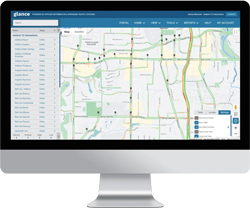 “The future of transportation is electric, connected, and autonomous, and in order for us to have this vision of efficient transportation with no fatalities and zero avoidable delay, it’s going to take everybody working together,” says Bryan Mulligan, president and CTO of Applied Information.
That philosophy has shaped the company’s development of systems that connect traffic signals, vehicles, roadside devices, and cloud-based platforms. Instead of forcing agencies into expensive rebuilds, Applied Information focuses on upgrading existing environments with newer capabilities.
The company points to the shift from traditional city server rooms to cloud computing as an example of how transportation systems can leap forward. Older infrastructure does not always need to be removed; sometimes it can be bypassed by introducing more flexible technology.
Safety at the Speed of Data
One of Applied Information’s most visible impacts is in emergency response. Its priority and preemption technology allows emergency vehicles to communicate with traffic systems, helping intersections respond when seconds matter.
When a fire engine, police vehicle, or paramedic vehicle approaches, traffic signals can coordinate movement by giving responders a safer path while stopping surrounding traffic. The goal is not only faster emergency response but reducing the risks created when vehicles attempt to move through intersections during critical situations.
School safety is another area where connectivity plays a major role. Connected flashing beacon systems allow communities to manage school zone operations remotely and adjust schedules when circumstances change.
For agencies, that flexibility solves a practical problem: safety systems only work when they operate at the right time. Weather delays, holidays, and schedule changes can all affect when school zones are active.
Preparing for Transportation’s Next Chapter
The challenge ahead is not knowing which technology will dominate transportation but preparing for multiple possibilities. Applied Information addresses this uncertainty through initiatives such as its Infrastructure Automotive Technology Laboratory, where connected vehicle technologies can be tested. The company also designs systems for upgradeability, including radios that adapt as communication standards evolve and devices capable of receiving secure software updates.
 This approach recognizes a reality familiar to public agencies: infrastructure investments must last. “We are living in a world where technological advancements are accelerating away from cities and counties’ ability to absorb that change,” Mulligan says.
As transportation becomes increasingly connected, agencies will need systems that balance innovation with practical constraints such as budgets, existing assets, and long replacement timelines. Applied Information combines transportation expertise with cloud technology, wireless connectivity, artificial intelligence, and adaptable hardware to help communities modernize without leaving existing investments behind.
The future of transportation will not arrive all at once. It will be built gradually, one upgrade at a time, on infrastructure that can keep learning, adapting, and changing with the world around it.
Company
Applied Information, Inc.
Management
Bryan Mulligan, President and CTO
Description
Applied Information is helping reshape transportation infrastructure by enabling cities to modernize existing systems for a connected future. Through cloud technology, wireless networks, AI, and adaptable solutions, the company helps agencies improve safety, efficiency, and resilience without replacing valuable infrastructure.
